
Paul Dudley presents on risk bow ties
Paul Dudley, a freelance risk trainer/consultant joined us at our risk workshop in London on 22nd May to demonstrate the value of risk bow ties. Please watch the video of the session below.
Risk bow tie
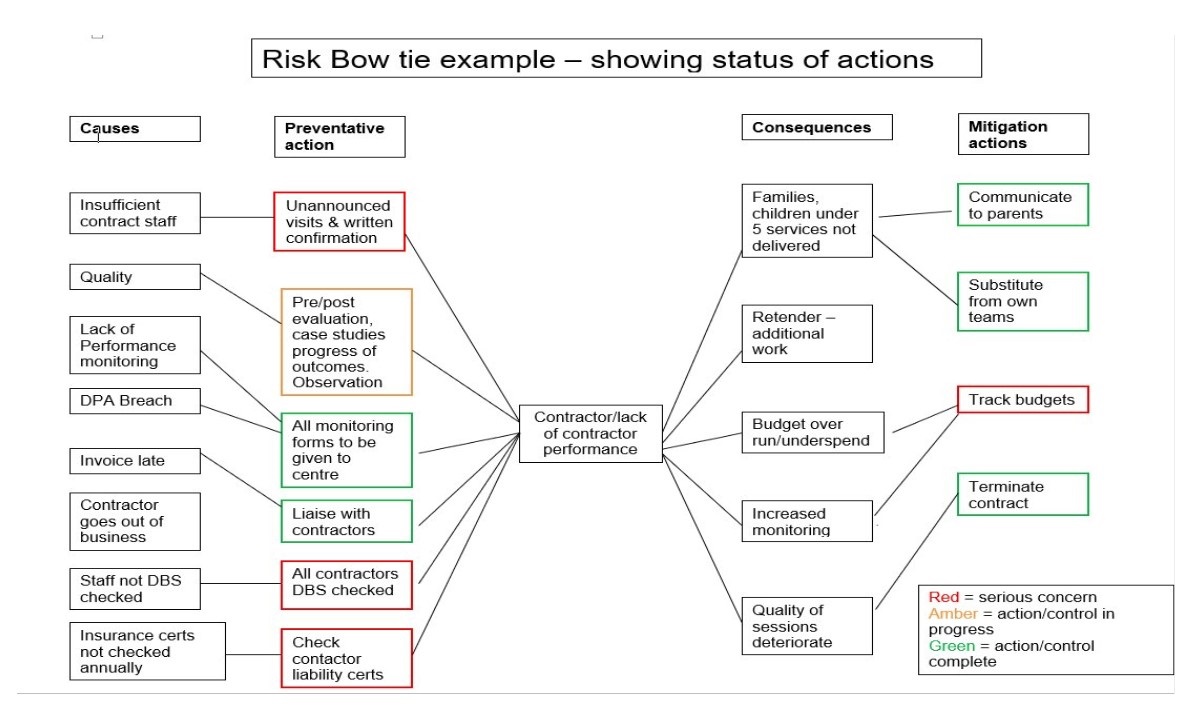
The risk bow tie diagram provides a visual summary of all plausible scenarios.
The bow tie method encourages a comprehensive analysis of risks. It identifies not just the top event (incident) but also the threats (events that could lead to the incident) and the consequences of the incident. This holistic view allows for a more effective strategy to manage risk.
By clearly highlighting the strengths and weaknesses of existing controls (barriers) that prevent incidents, bow ties aid in informed decision-making. Resources can be prioritised towards fortifying weak barriers and implementing additional controls where necessary.
Reporting tool
Risk bow ties can be used as a reporting tool to report information to board members. The diagram sets out the event, causes, preventative actions, consequences and mitigating actions.
Risk register
This information can then be transferred into a risk register. Ensuring that the actions on risk registers are working is key. How well the mitigating actions are being performed can be demonstrated using the bow tie diagram in order to report back to the board or managers.
Did you know JCAD Core can produce Bow Tie reports for you – contact us to show you how.
