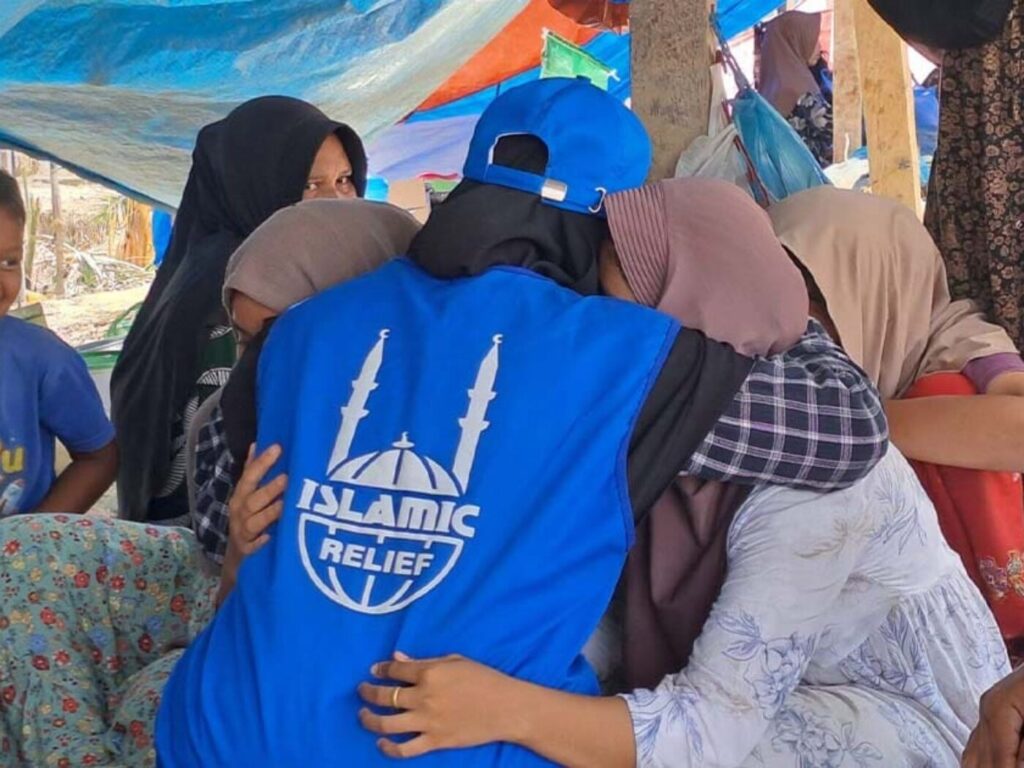
When Islamic Relief Worldwide set out to strengthen its approach to risk management, the challenge wasn’t simply tracking risks – it was building a genuine culture of accountability across a sprawling network of field offices in some of the world’s most difficult operating environments.
We spoke with Sheeraz Khan from Islamic Relief Worldwide about how the organisation moved from scattered spreadsheets to a unified system that now supports around 180 users across more than 30 country offices – from Iraq to Kenya to the Philippines.
The Challenge: Clarity, Accountability, and Culture
Before implementing JCAD CORE, Islamic Relief relied on Excel spreadsheets and manual follow-ups to manage audit recommendations and risk registers. The approach worked, but it lacked the integration and visibility needed to drive real behavioural change.
“We needed greater clarity about our direction, clear accountability, and a mechanism to encourage people to make meaningful progress toward their goals,” Sheeraz explained.
The goal was to move beyond reactive follow-ups toward something more embedded in everyday work, where staff across the globe understood their responsibilities and could demonstrate progress without constant prompting from the central team.
The Results: From 38% to 72% Implementation of High-Risk Recommendations
The impact has been measurable. Implementation rates for high-risk audit recommendations jumped from 38% to 72% – a significant shift for an organisation managing complex operations in challenging environments like Yemen, Afghanistan, and Mali.
“Islamic Relief Worldwide has lots of field offices,” Sheeraz said. “They all know the system now; they know how they upload their audit reports, they know their risk registers, and they know what they’re responsible for. They have their own JCAD champions, so it works.”
Each office maintains its own risk register within the system, creating local ownership while maintaining central oversight. Workflows connect country offices with headquarters, allowing both parties to collaborate more effectively.
“By having that workflow where both parties are embedded, it’s really helped us,” Sheeraz noted. “While I’m working on something here, a notification comes in, and you can see what work they’re doing in Mali or Malawi or Afghanistan. Then you can start having that conversation about their controls and how they can improve.”
External Validation: Impressing Auditors and Funders
Operating internationally in sensitive regions means Islamic Relief faces regular scrutiny from external bodies, including the UK, Canadian and Swedish governments and firms like Grant Thornton. Having a centralised system has made these reviews considerably smoother.
“We give them access to the system. They can see what they like, and they can see the culture in terms of how we work,” Sheeraz said. “By them seeing it on the system, I think breeds confidence greatly.”
The feedback has been positive. Reviewers have noted that Islamic Relief is ahead of comparable NGOs on risk management- a significant advantage when demonstrating accountability to funders and regulators.
Driving Engagement: The Power of a Scoring System
One unexpected success factor? Competition.
Islamic Relief introduced a risk and assurance dashboard that rates how well different parts of the organisation demonstrate their risk culture, using a simple red-amber-green scoring system.
“People love a score. They like to be competitive. As soon as I put in a scoring system, it shot up completely. Directors in particular get very competitive.”
Navigating Unique Challenges
International charities face a distinct set of risks. The current global environment, with shifting political attitudes toward international aid, increased scrutiny of cross-border funding, and geopolitical volatility, adds layers of complexity.
“International charities are probably not seen as just ‘it’s a good thing to help people’ anymore. Governments treat us with more suspicion now,” Sheeraz observed. “Countries are a bit more protectionist. Working internationally is more difficult because people are looking inwards.”
Add to that the usual organisational concerns, AI, climate change, reputational risk, social media, and the need for a robust, adaptable system becomes clear.
“The problem increasingly is that it’s very difficult to look into the future because the present’s changing so much,” Sheeraz said.
Advice for Other Charities
For charities considering a move toward more structured risk management, Sheeraz offered practical guidance:
Focus on objectives. “What are you trying to get out of this? You’re trying to get people to buy into risk management. How far is the system going to help you achieve that?”
Involve the users. Islamic Relief’s international programmes and finance teams were part of the selection process. “When they had chosen, they’ve bought into it. They felt more invested.”
Think value for money. “We’re a charity – every penny has to be accountable. I’ve used other systems for different purposes. In terms of culture, value for money, and outcomes, JCAD has been the best one, easily.”
Looking Ahead
Islamic Relief continues to refine its approach, with an eye on JCAD CORE 5 to enhance the user interface further. In the meantime, the system remains deeply embedded in how the organisation operates.
“It’s quite institutionalised now,” Sheeraz said. “Everyone pretty much knows the system. It’s been strangely smooth – you always think the worst, but it worked out very well.”
For a charity managing high-stakes operations across dozens of countries, that kind of stability and clarity makes all the difference.